Exploring the Benefits of Outdoor Stairlifts Over Ramps for Diverse Abilities in Today's Economy

Mobility challenges affect many people, and finding the right solution to navigate outdoor steps can be a complex decision. While ramps have long been the go-to option for accessibility, outdoor stairlifts offer a compelling alternative that better suits a variety of needs and abilities. In today’s economic climate, where cost and practicality matter more than ever, understanding the advantages of outdoor stairlifts can help individuals and families make informed choices that improve quality of life.
Why Outdoor Accessibility Solutions Matter
Outdoor steps can create significant barriers for people with limited mobility, including seniors, individuals with disabilities, and those recovering from injuries. These barriers affect independence, safety, and social participation. Accessibility solutions must address these challenges effectively while fitting within budget constraints and physical space.
Ramps have traditionally been the standard solution, but they come with limitations. Outdoor stairlifts provide an alternative that can better meet the needs of many users, especially when considering factors like terrain, space, and user ability.
Comparing Outdoor Stairlifts and Ramps
Space Requirements
Ramps require a significant amount of space to comply with accessibility standards. For example, the Americans with Disabilities Act (ADA) recommends a slope ratio of 1:12, meaning for every inch of vertical rise, there should be at least 12 inches of ramp length. This can result in very long ramps that take up large portions of yards or outdoor areas.
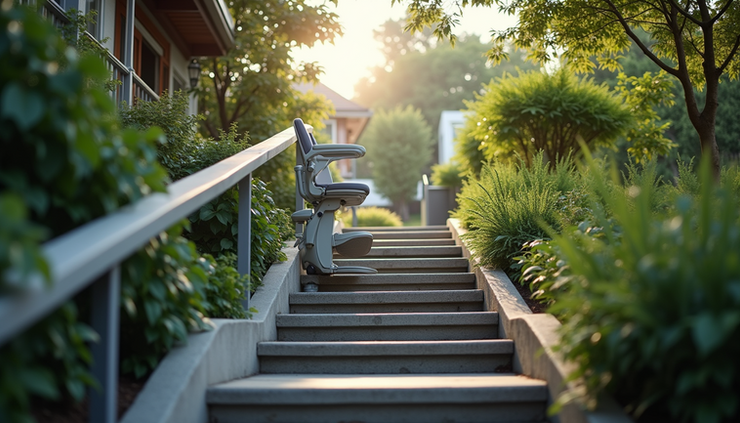
Outdoor stairlifts, by contrast, are installed directly on the existing staircase, requiring minimal additional space. This makes them ideal for homes with limited outdoor areas or uneven terrain where building a ramp would be impractical or impossible.
Installation and Maintenance Costs
Building a ramp involves construction materials, labor, and sometimes permits, which can add up quickly. Maintenance costs also include cleaning, repairs, and potential weatherproofing.
Outdoor stairlifts typically have a higher upfront cost than a simple ramp but can be more cost-effective over time. Installation is usually quicker and less invasive, and modern stairlifts are designed to withstand outdoor conditions with minimal maintenance. For many, the long-term savings and convenience outweigh the initial investment.
User Ability and Comfort
Ramps require users to have the physical ability to navigate an inclined surface, which can be challenging for those with limited strength, balance issues, or fatigue. Pushing a wheelchair or walking up a long ramp can be exhausting and sometimes unsafe.
Stairlifts provide a seated, motorized option that requires minimal physical effort. Users can comfortably and safely ascend or descend stairs, reducing the risk of falls or strain. This makes stairlifts a better fit for people with a wide range of mobility levels.
Safety Considerations
Outdoor ramps can become slippery when wet or icy, posing a fall risk. They also require good lighting and handrails to enhance safety.
Outdoor stairlifts come equipped with safety features such as seat belts, obstruction sensors, and weather-resistant components. Their controlled movement reduces the chance of accidents, especially for users who might struggle with balance or coordination.
Practical Benefits in Today’s Economy
Cost Efficiency Over Time
In an economy where budgets are tight, investing in a solution that lasts and requires less upkeep is crucial. Outdoor stairlifts, while sometimes more expensive initially, often prove more economical over time due to lower maintenance and repair costs compared to ramps that may need resurfacing or structural reinforcement.
Increased Property Value
Homes equipped with outdoor stairlifts can appeal to a broader market, including aging homeowners and families with mobility needs. This can enhance property value and marketability, a practical consideration for those planning to sell or rent their homes.
Flexibility and Adaptability
Outdoor stairlifts can be customized to fit various stair configurations, including straight, curved, or multi-level stairs. This flexibility means they can adapt to unique outdoor environments without extensive remodeling.
Environmental Impact
Building long ramps often requires significant materials like concrete or wood, which have environmental footprints. Stairlifts use fewer materials and can be installed with minimal disruption to the landscape, making them a greener choice.
Real-Life Examples
Case Study 1: A retired couple living in a home with a steep front porch found that building a ramp would consume most of their front yard. Installing an outdoor stairlift allowed them to maintain their garden space while gaining safe access to their home.
Case Study 2: A person recovering from a leg injury needed temporary outdoor access. A stairlift provided a quick, non-permanent solution that could be removed once mobility improved, unlike a ramp which would have been a long-term installation.
Case Study 3: A family with a member using a wheelchair found that the outdoor terrain was uneven and unsuitable for a ramp. The stairlift installation on their existing stairs provided reliable access without costly landscaping.
Choosing the Right Outdoor Stairlift
When selecting an outdoor stairlift, consider:
Weight capacity to ensure it supports the user safely.
Weather resistance features like waterproof covers and rust-proof materials.
Power options, including battery backup for power outages.
Ease of use, such as simple controls and comfortable seating.
Professional installation to guarantee safety and compliance with local regulations.


Comments